

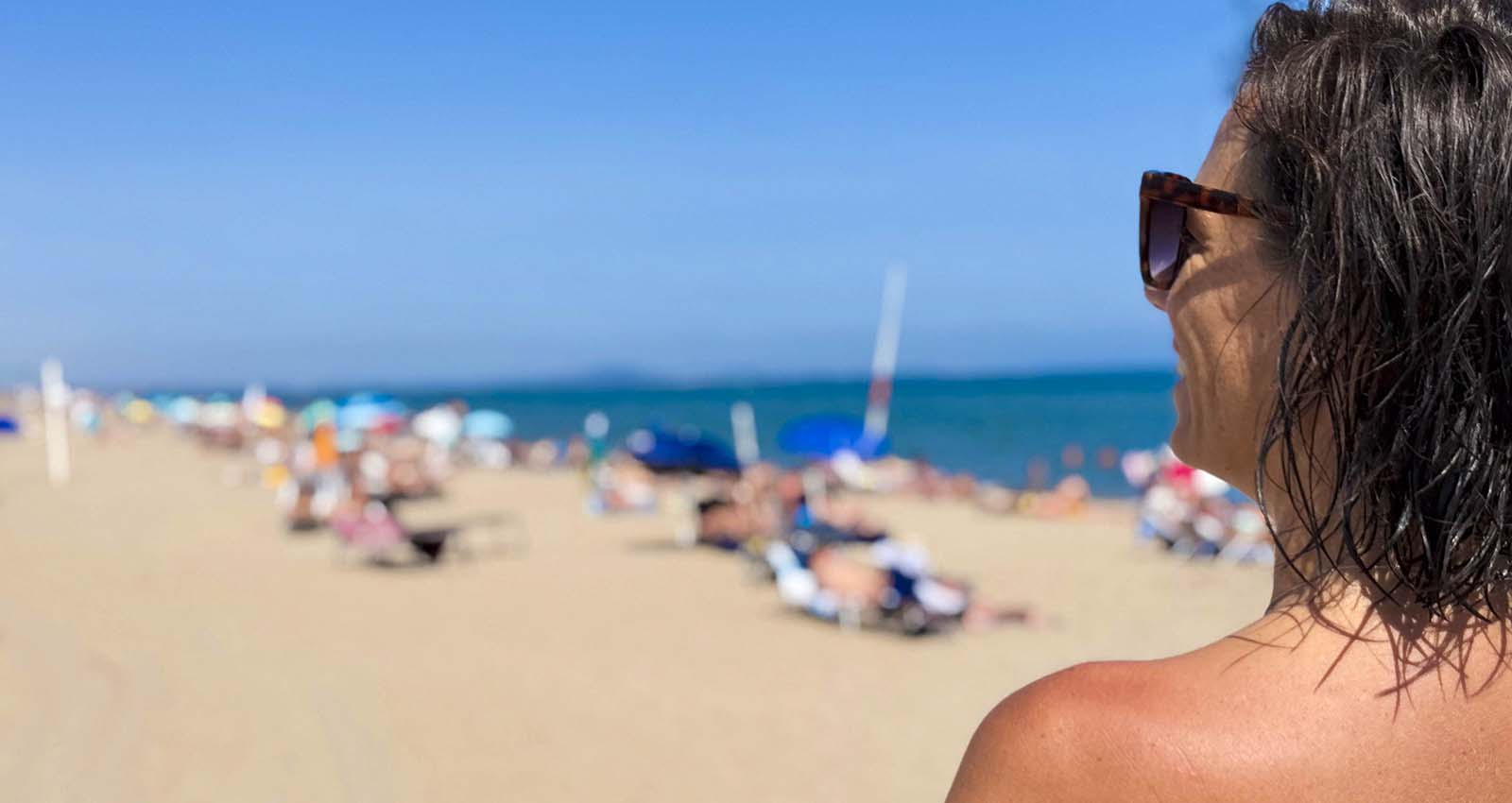
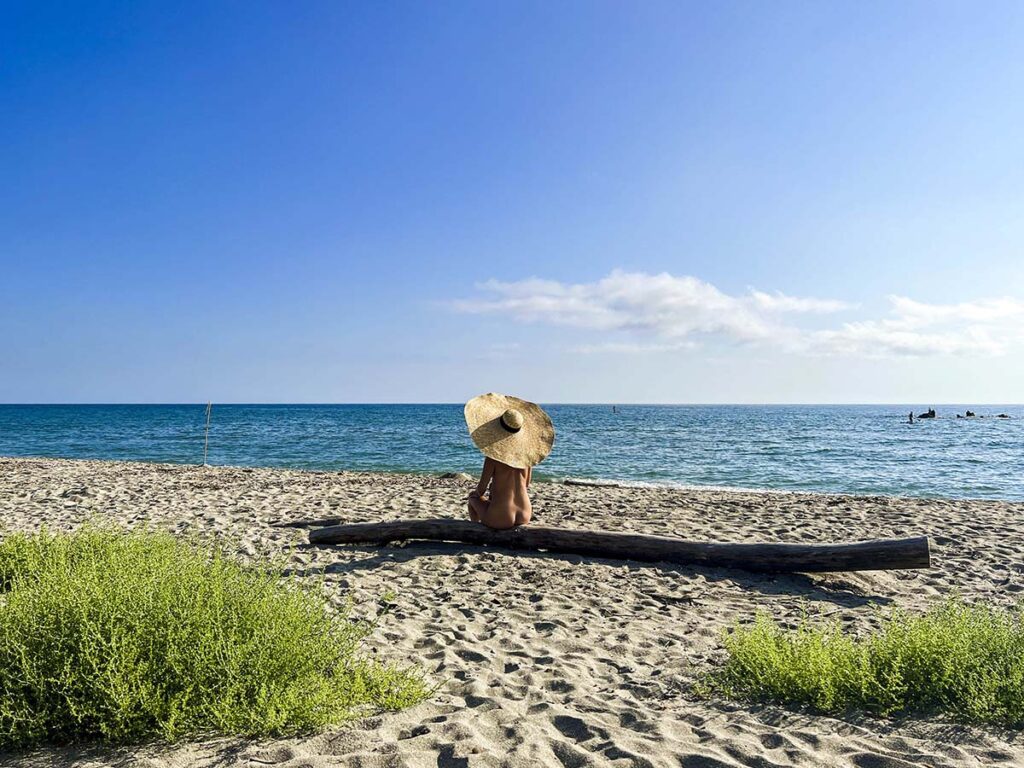
We love travelling in spring. Nature is still green, you can read the happiness on people’s faces when they have their first nude beach visit of the year, but most of all, we love it because the big crowds still haven’t arrived yet. Several times, we would end up at this remote stretch of beach that’s considered an unofficial nude zone, but of which we’re certain that in just a few weeks, nobody will even consider going naked there.
If you’re used to summer travels, you probably know exactly what we’re talking about. You’ve been looking forward to checking out a new nude beach, found all the information, but once you’re there, you find nothing but bikinis and swim shorts.
In fact, this is also a struggle with our content. A beach that’s 100% nude when we visit in early spring might turn 100% textile by the time you get there in summer. Seasonality is, unfortunately, a big thing when it comes to nude beaches.
Why this happens
A good example is the popular tourist destination Benidorm in Spain. It’s a coastal city with a stretch of several kilometres of urban beach. At both ends, once you turn around the corner, you’ll find a nude beach. Well, at least, that’s what we found when we spent the first half of 2020 there during one of the COVID waves.
Visit Benidorm today during the summer, and you may get a completely different picture. When mass tourism is at its peak, even a huge urban beach like this one gets completely packed, and not every tourist feels much for being only a few centimetres from the person next to them. So they start exploring, and only one turn around the corner brings them to this quiet, remote bay. By the time we arrive, all those swimsuits make it feel pretty uncomfortable to take off our clothes.

Official vs unofficial nude beaches
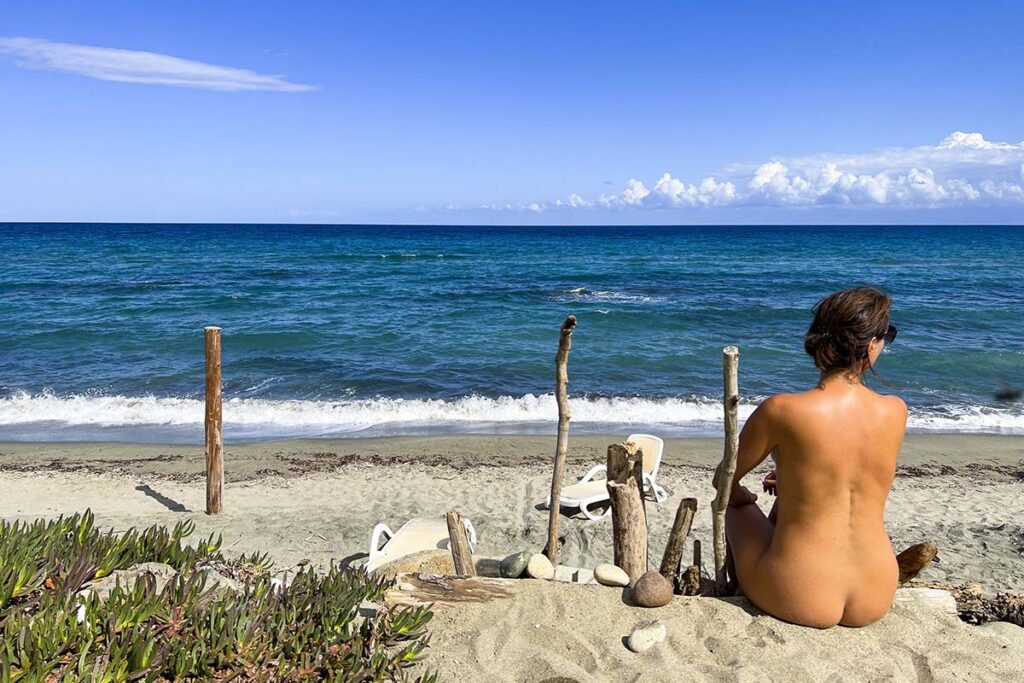
This is especially uncomfortable when we’re talking about unofficial nude beaches because there’s no signage explaining that it’s our right, or even our tradition, to go naked here. Unofficial nude beaches are just a common agreement between naturists that a certain spot is remote enough to get naked. But the “swimsuit invasion” isn’t limited to unofficial beaches.
We once travelled to Antiparos, an island in Greece, because it was home to one of only five official nude beaches in the country. A stretch of white sand several hundred meters long. A large sign indicated the start of the nude section. When we arrived mid-summer, we found a magnificent beach with white sand and shallow blue water. The only downside: Everyone was wearing swimsuits. After some looking around, we found a small section in the far end, where the sand had turned to rocks and driftwood, making the image much less idyllic. And that is where the naturists resided.
Even though the whole beach was an official nude beach, the presence of so many bathing suits had made the naturists feel uncomfortable being naked on one of only five beaches in the country where it’s officially allowed.
The problem with nude beach signs
Eventually, just to make a statement on that beach in Greece, we settled down between the swimsuits and got naked. There might have been an awkward look or two, but other than that, the sign clearly had done its job. At least, partially.
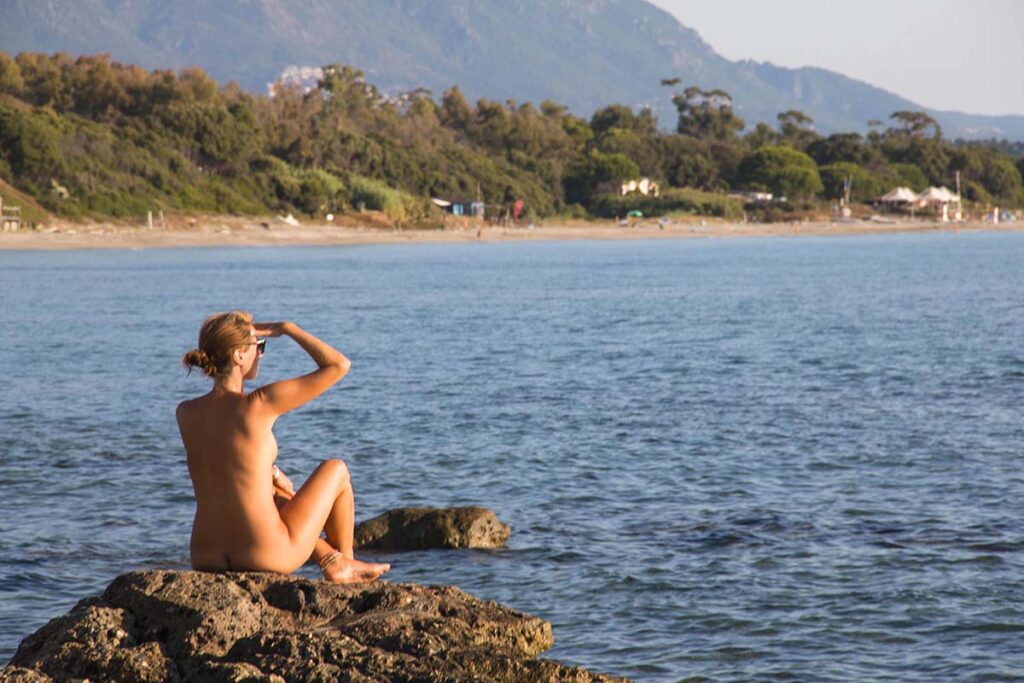
Here’s the thing, the way people perceive nude beach signs depends a lot on their knowledge of the naturist culture. To us, naturists, such a sign doesn’t just mean that we are allowed to be naked, it also means that we’ll likely encounter people with a similar mindset and who know about the nude beach etiquette.
To textile visitors, however, these signs are often perceived as a warning. In fact, in some countries they are actually a warning, something like “Beware, naked people might be seen past this point”. They don’t realise the discomfort they might be causing. In their heads, the sign is only there to protect themselves from discomfort. In other words, the sign might as well say “If you don’t mind seeing a naked person, you’re free to go further”.
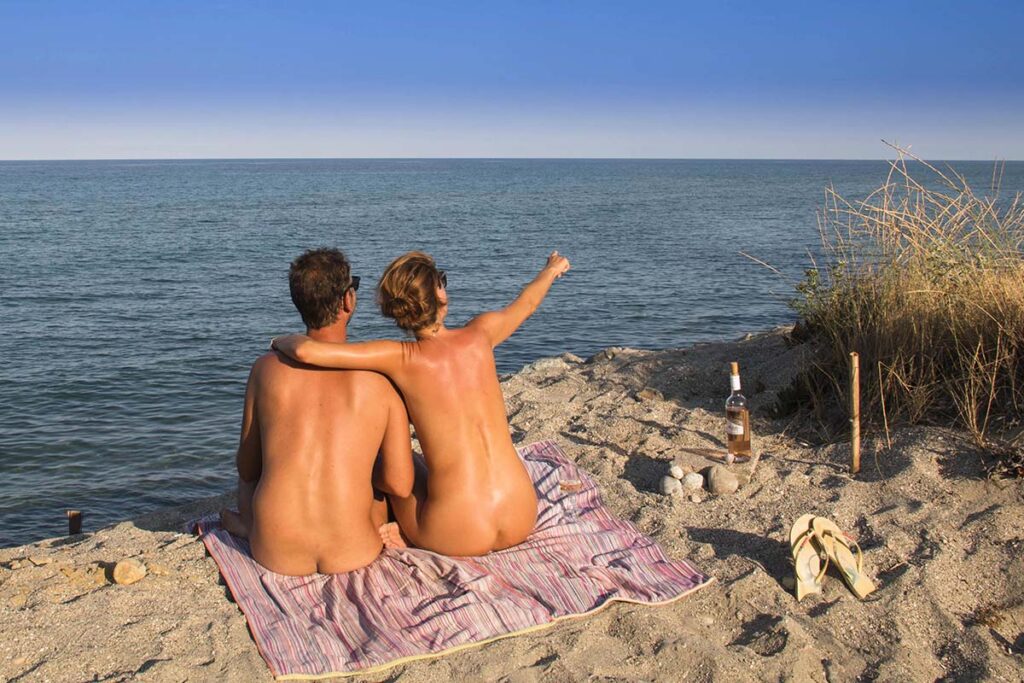
Timing is everything
But even if the sign is there and you know that going naked on this or that beach is completely legal, doing so when 80% of the other people are clothed isn’t very comfortable. So how do you avoid this from happening?

The most important rule is timing. As we mentioned earlier, bathing suit invasions usually happen more during the summer months, so if you can travel in spring or autumn, you won’t only find that the nude beaches are more nude, but also that there tend to be more unofficial nude beaches.
If summer is your only option, picking the right day of the week can help too. In very touristy places, weekdays tend to be more relaxed than weekend days. However, on nude beaches that usually attract a very local crowd, it might be vice versa, and weekends can be more nude.
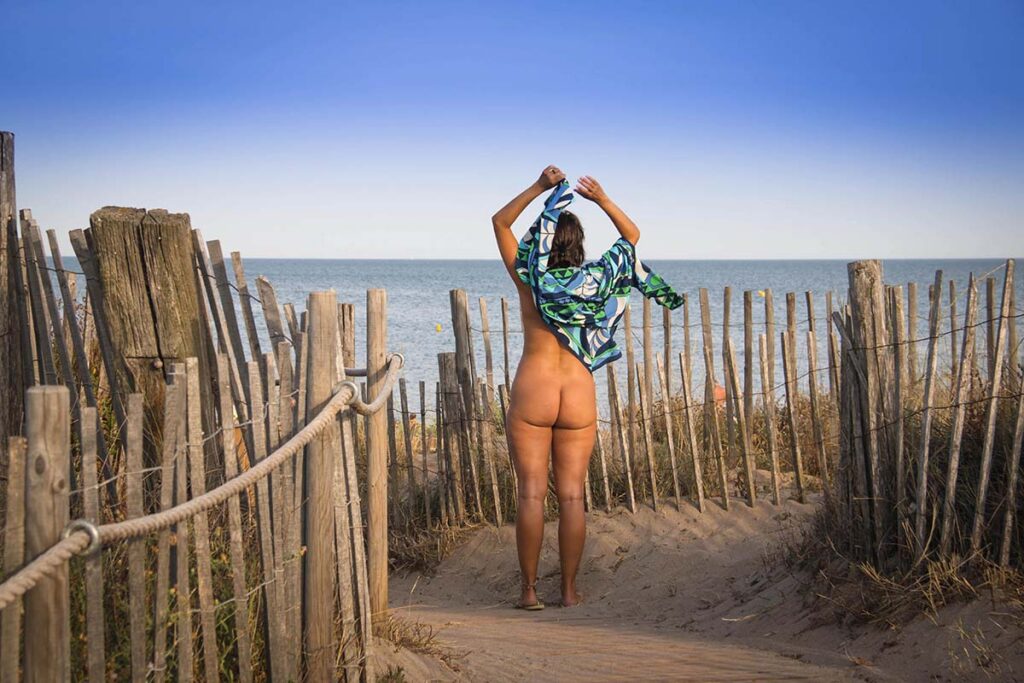
First come, first served
In countries that are known to have lots of unofficial nude beaches, like Croatia and Greece, there’s often a first come, first served principle. Meaning: the first person arriving at the beach sets the dress code. The reason for this is simple: Naturists are unlikely to pick a beach that already has bathing suits, and bathing suits are unlikely to pick a beach that has naked people.
This concept is pretty annoying because it means that the great nude beach you visited today might become a textile beach tomorrow. The best trick is to go early and make sure that you are the one setting the dress code.
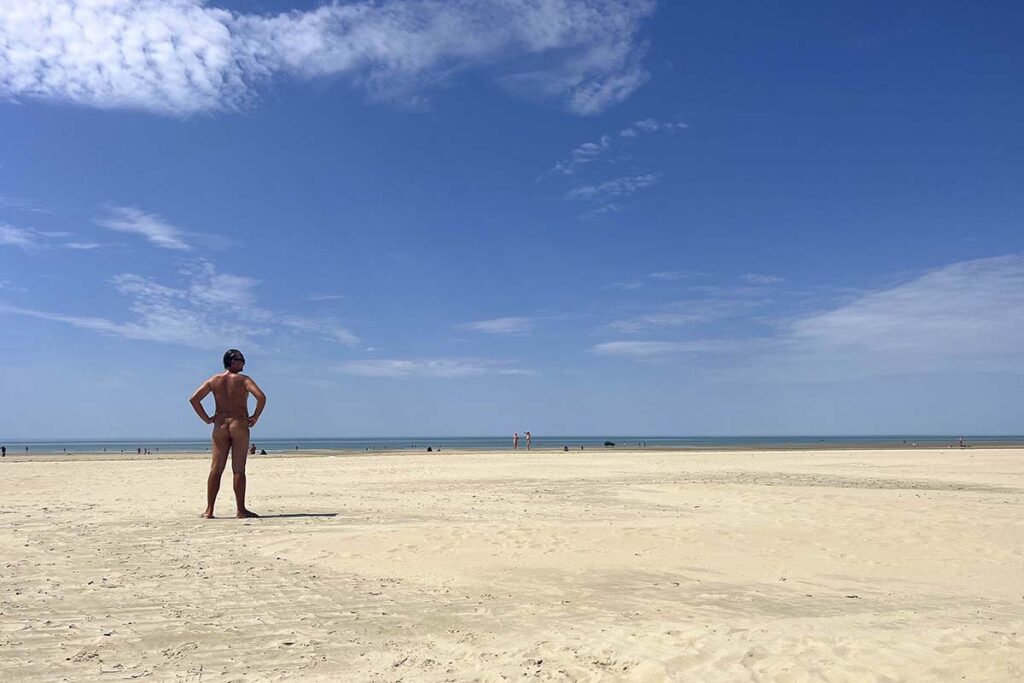
Resort beaches are always a win
If you want to be absolutely certain that the majority of the people on the beach are nude, pick a beach that’s connected to a naturist resort. Like the ones at Euronat, Arnaoutchot, or Sérignan Plage Nature. Or the famous Linguizzetta beach on Corsica that’s home to several naturist resorts.
On these beaches, you’re very likely to find more naked people during the summer months, just because the resorts are more crowded that time of the year as well. The downside is that these beaches can be hard to reach when you’re not actually staying in the resort.
Do your research
The best tip we can give you is to spend a bit more time on your research. Just half an hour of reading comments and reviews can save you long travel times and strong disappointments. In our Destination Clothes Free videos, we often try to mention the month when we visited, to give you an indication.
If you read comments or reviews on Google Maps or so, always check when it was posted and try to figure out when this person visited the beach. If you notice that most reviews are from spring or autumn and few or none are from summer, you can be pretty sure that the beach won’t be worth your time in July or August.
Finding comfortable nude beaches isn’t always easy. But when you do find them, they are always worth it.

Support Naked Wanderings
Do you like what we do for naturism and naturists?
Did we make you laugh or cry?
Did we help you find the information you were looking for?
Then definitely join our Patreon community!
Unfortunately, I will be leaving the Internet world. I have enjoyed all of your videos and newsletters. I wish you the best in your future travels. Sincerely, Gerald
So sorry to see you go Gerald! All the best!
I’ve been to oficial nude beaches where I was the only one following the proper dress code. It’s uncomfortable at first, but It’s important that some of the less embarassed set a precedent. That one time some people followed my lead, so I think there are always some nudists hiding between the textiles that just aren’t comfortable being the first ones.
That’s something we noticed as well. A lot of people don’t want to be the first to get naked and as soon as we undress, they do too
Hi
Well this scenario happened to me just yesterday.
I had gone to a local beach here in the UK and one regarded as unofficial but tolerated for I think about a century 🙂
I encountered three folk wearing costumes and regarded it as a strange dynamic as one came up to me and we chatted. However I noticed where their eyes were going, but I was chilled and continued to chat. They informed me that they weren’t into naturism but loved the setting. We were certainly agreed on that as such a beautiful day.
He suggested to me that I may find shelter from the sun up the beach where he had left his towel.
I said maybe soon, this as I had just been into the sea and dried as by walking a fair length of the beach and needed to recoup as it were.
So to cut a story short, I did go up to his spot as to seek that need shelter and then felt they had gone cold on me, this as they were with a partner who was also wearing a swimsuit. I felt games were being played and I did pop into their space when they left just five minutes later. I did feel that the female side of the duo wanted to stay… The other clothed person had joined them at the waters edge previously…
I did think it strange that they were in effect grouped together.
Maybe they will see the benefits and experience being nude in time soon, and I couldn’t help muse as they feeling the way I once had in the discovery of naturism 🙂
All in all a strange day, but I’m ready again tomorrow but a different local beach.
How spoilt am I ? ~ ‘ahh another five dips in the sea, At least ~Thank you 🙂
This is the difficulty with clothed people on nude beaches, you don’t know their background. Don’t they know? Don’t they care? Are they just curious but didn’t dare to take the step yet?
In Spain, unfortunately, we are enjoying fewer and fewer naturist or nudist beaches… it doesn’t matter if there are signs, warnings, or recommendations… clothed people invade even the most secluded, hard-to-reach beaches… their shamelessness and audacity know no bounds.
Spain is a country with many beaches, and of those, few are nudist… and on top of that, clothed people invade them… for us, it’s a losing battle…
In France, on nudist beaches, there are nudists, and clothed people are asked to undress or leave…
In Spain, nudists are oppressed, and clothed people invite more clothed people to ruin our few remaining spaces of freedom.
Please excuse me if the translation isn’t perfect.
Unfortunately, this is a side effect from the nude-friendly laws in Spain. Since you can (technically) not be asked to get dressed on a beach, neither can you be asked to be naked. Add the mass textile tourism to this, and that’s where Spanish beaches are now…