

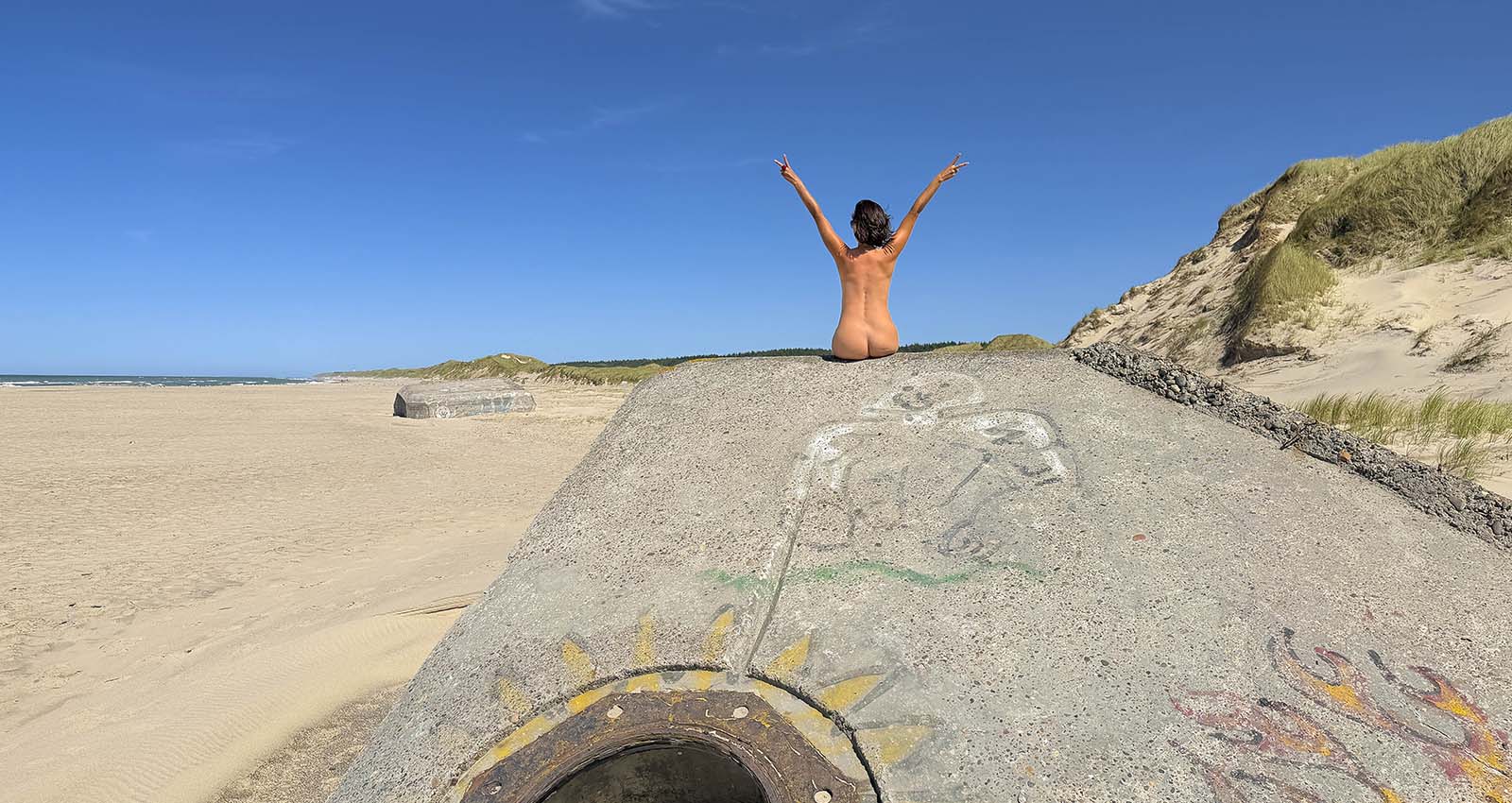
There are a few countries in the world where public nudity is not considered an offence and where, as a consequence, you are legally allowed to be naked everywhere. But what does that actually mean? Can you really wander out of your front door and head towards the grocery store on a sunny Saturday morning? Can you take off your clothes to catch some sun in the local park? Or is this more beach-related?
We have been to a few countries with such laws, like Spain, the UK, New Zealand, and most recently Denmark. Our experience in that last one might well be the most interesting of all.
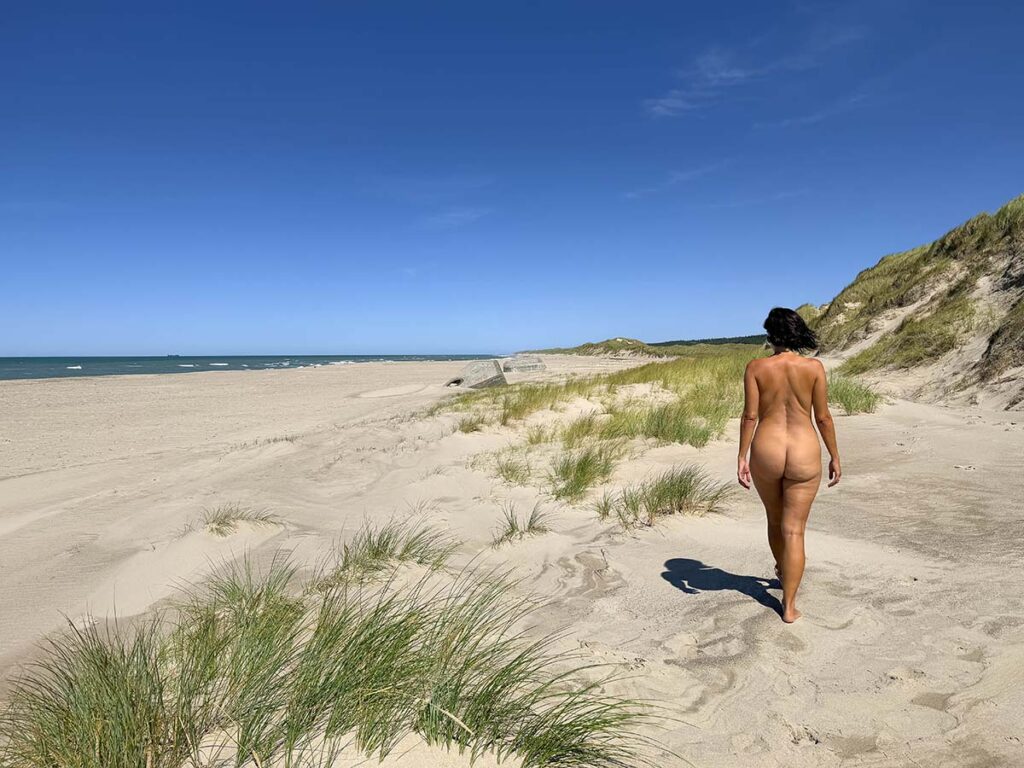
When public nudity is not an offence
Let’s quickly put these countries next to each other. In Spain, you can legally be naked anywhere except when the local municipality forbids it (as is the case in Barcelona). Yet, this mostly applies to beaches. Technically, it should be totally fine to strip down on any beach, but doing so on a stretch of sand that’s packed with bathing suits isn’t particularly a comfortable feeling. So most naturists will seek out the far ends of beaches, remote beaches, or official nude beaches.
In New Zealand, we noticed a similar practice. Just like in Spain, it’s not illegal to be nude on the beach, but comfort dictates seeking out spots with no or few others. When we were looking for places to skinny dip, if there were already naked people, they would usually cover up while we were passing by. Except at the beaches that are generally known as nude beaches and where most people go to get naked.
The UK showed a different concept. While, also here, you can be naked at any beach, the large majority of people choose to only do so within the boundaries of an official nude beach. We found this rather funny at times. At the famous Studland nude beach, for example, there was a dense nude crowd between the two signs and not a single naked person more than one meter outside the official nude zone, even though there was much more space.

The Netherlands also deserves a place in this overview, because their laws say that it’s appropriate to be naked in natural surroundings, obviously also including beaches that are not in the middle of an urban zone. But unlike in the UK, we often already saw naked people on our way towards the official nude beach. In our experience, Dutch naturists considered anything within a radius of a few hundred meters of a nude beach sign close enough.
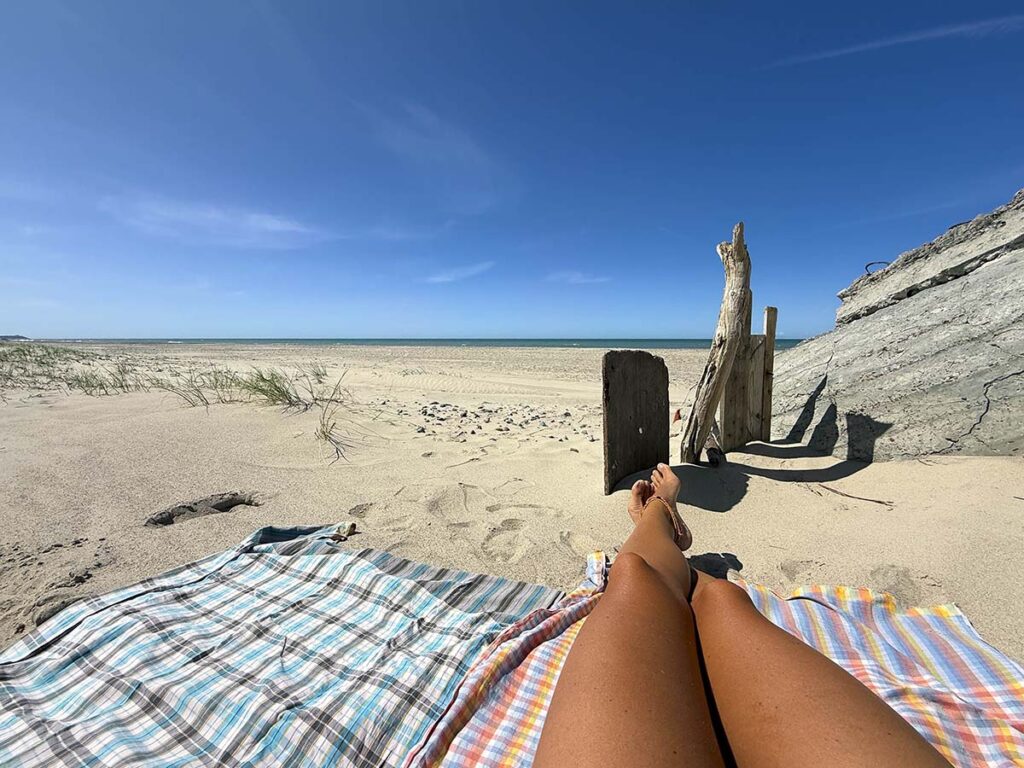
Why are we limiting ourselves?
When we look at Spain, New Zealand, the UK, and the Netherlands, something clearly stands out: It’s not because something is legal that it’s also by default socially acceptable. So even though we are allowed to be naked everywhere, we will still seek out the places where we are unlikely to shock or disturb anyone with our nudity. Which we consider a very sensible thing to do. In the end, we go to the beach to have a good time. Running into discussions with the clothed visitors or the authorities can really suck all the fun out of that.
Even when nobody walks up to complain, being the unexpected naked person at a beach will draw attention. You will get stares, you will get gawks, you may see fingers pointing towards you or parents covering the eyes of their children. This too is not particularly our idea of a great nude afternoon at the beach. So we choose the more comfortable road and wander a few hundred meters away from anyone who could find our naked bodies offensive or entertaining.
Our first Danish “nude beach”
Denmark does not have any official nude beaches. The closest thing we found was a section of Bellevue beach, in a neighbourhood just north of Copenhagen, that had a sign saying: “The Naked Truth – The beach should be enjoyed by all guests – Make space and show consideration”. The title “The Naked Truth” was the only indication that this was about naked people and not any other minority.
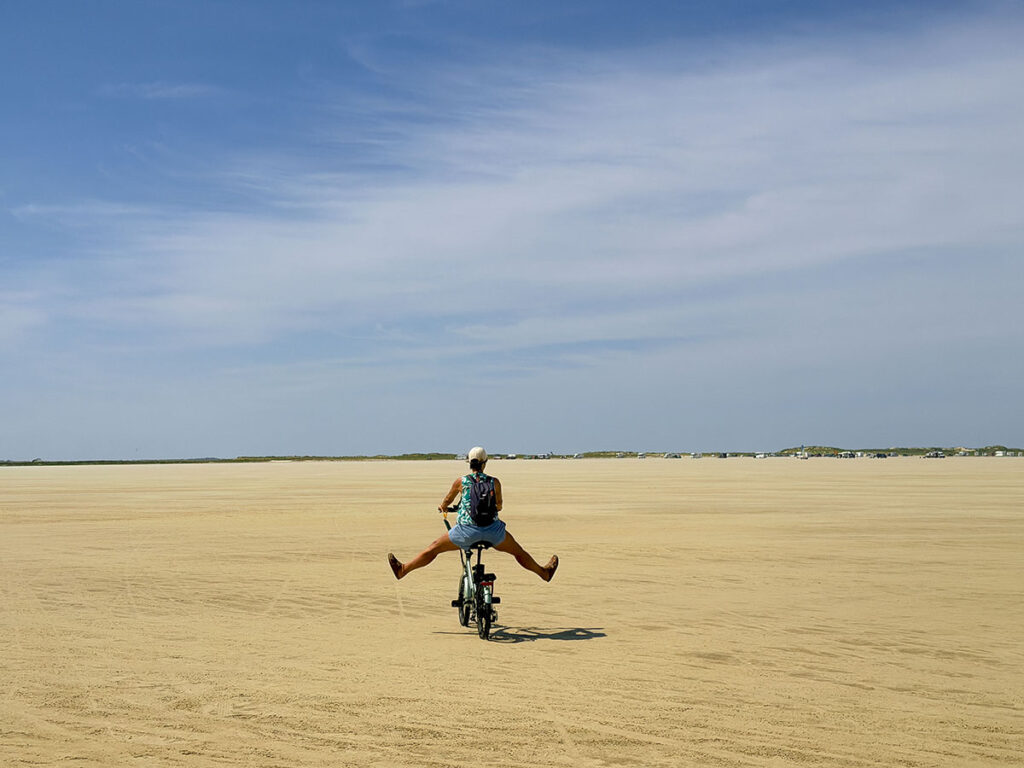
But our first nude beach visit in Denmark was on the whole other side of the country, on the island of Rømø. In the very south of the island is an immense beach called Sønderstrand with a stretch of sand as far as the eye can see. When we first got there, we thought it resembled more like the salt flats in Bolivia than any beach we had ever seen. Most of this beach is used as a car park, and only at the far end is a section with soft sand and a few dunes. This is where most of the beach visitors end up.
Our research said that people get naked on this beach, but when we got there on a warm day in mid-July, we saw hundreds of bathing suits. We pretty easily concluded that this was going to be a no-no. Probably it was one of those beaches where some people get naked in the off-season, but right now, in the middle of summer, it felt quite impossible.
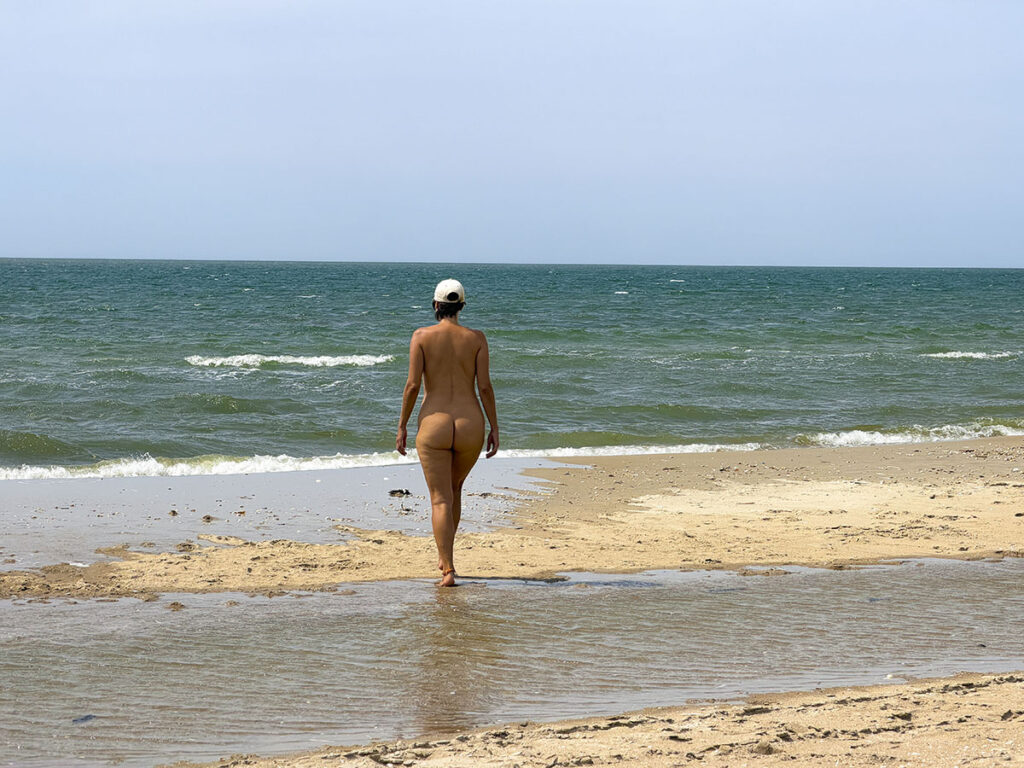
And that’s when we spotted them. In between a sea of bathing suits was a naked family. The fact that they were just right there, in the middle of it all, with nobody else blinking an eye, was probably why we hadn’t noticed them quicker. A little further, we saw another naked couple and a few more near the end of the crowd. We joined them, and nobody gave us even a single glimpse.

The country that doesn’t know the towel dance
From Rømø, we headed up towards North Jutland, at the very tip of the country. An area known for its wide, white shores and massive rolling dunes. We visited beach after beach, and everywhere we would find the same pattern. Lots of bathing suits near the beach entrance, and although most naked people resided towards the ends of the crowds, more often than not we saw a few nude sunbathers right in the middle of the bathing suits. And everyone else acting as if nudity was the most normal thing in the world. And in a way, it was.
Now don’t think that Danish beaches are full of naked people. On the contrary, on every beach we visited, the bathing suit vs nude ratio was 20 to 1 at best. It was just that nobody seemed to care at all about what the others were or were not wearing. And then, we noticed another very interesting phenomenon.
We haven’t visited a lot of textile beaches during the last decade, but when we do, we take great pleasure in seeing people do the “towel dance”. You know, when they want to switch from their wet bathing suit into dry clothes with a towel wrapped around their waist. One hand keeping the towel tight, the other trying to catch the wet pants while jumping on one leg with a face that says “Please, please, please don’t fall down”. In Denmark, we haven’t seen this a single time.
When the Danes want to change wet clothes with dry ones, they just take off the wet ones, are bare naked for a few seconds and then put their dry clothes on. There’s no towel dance, there’s no hiding, there’s no awkward faces. The casual dress changing didn’t just happen on the beach either. Lots of people would walk in a bathing suit towards the parking lot, take it off, and rinse the sand off their bodies before putting on clothes. In Denmark, we’ve seen more naked people in parking lots than at the parking lot of your average naturist resort.
It all seemed so logical and natural that we could only think: “It must have taken some sadistic monster to convince most of the world’s population that one should change dress on a beach wrapped in a towel”.
It’s culture
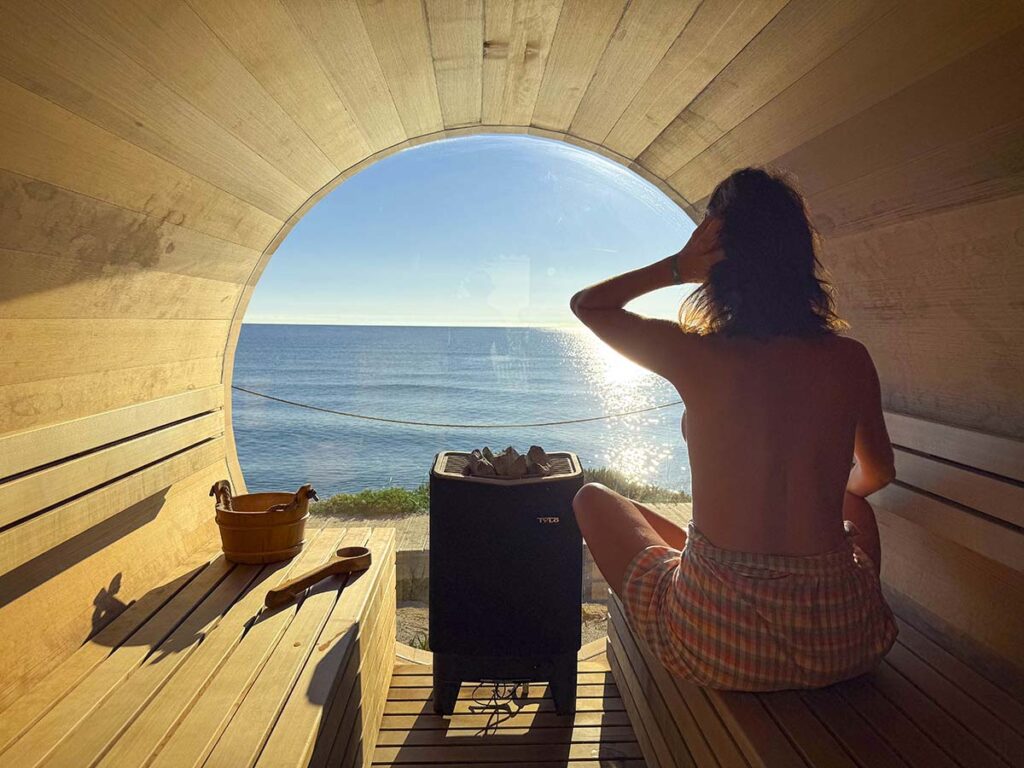
Why is it that the Danes are so casual about nudity while the rest of the world can be so hung up about it? We got our first clue at a (non-naturist) campsite. The evenings were cold, and the camp had a sauna which we were looking forward to trying out. To avoid any awkward situation, we asked the manager upfront about the dress code. He just shrugged his shoulders and said: “Whatever you want”. And it was just that. We were naked, another couple was naked, and a father with his two sons were in swim shorts.
In further sauna experiences, we would learn that the father and his kids were really the exception. Saunas in Denmark are by default enjoyed in the nude. Maybe it was this ancient sauna tradition that somehow made nudity acceptable?
A little research showed that the normalisation of nudity is baked even deeper into Danish culture. Many public swimming pools still have communal changing rooms and showers (although sometimes gender separated), and nude showering is considered mandatory before you can have a swim. Also, in Danish schools, a robust, matter-of-fact sex education enforces understanding of the human body from a young age, in a way that discourages shame.
Add the sauna, the showers at the public pool, the sex education and probably a few other cultural elements together, and you end up with a society that considers nudity as something practical and functional, that can easily be separated from sexual intent. This is exactly what we had been seeing on the beaches and even in their parking lots. People just doing their thing in the most practical way. The most normal way.

Support Naked Wanderings
Do you like what we do for naturism and naturists?
Did we make you laugh or cry?
Did we help you find the information you were looking for?
Then definitely join our Patreon community!