

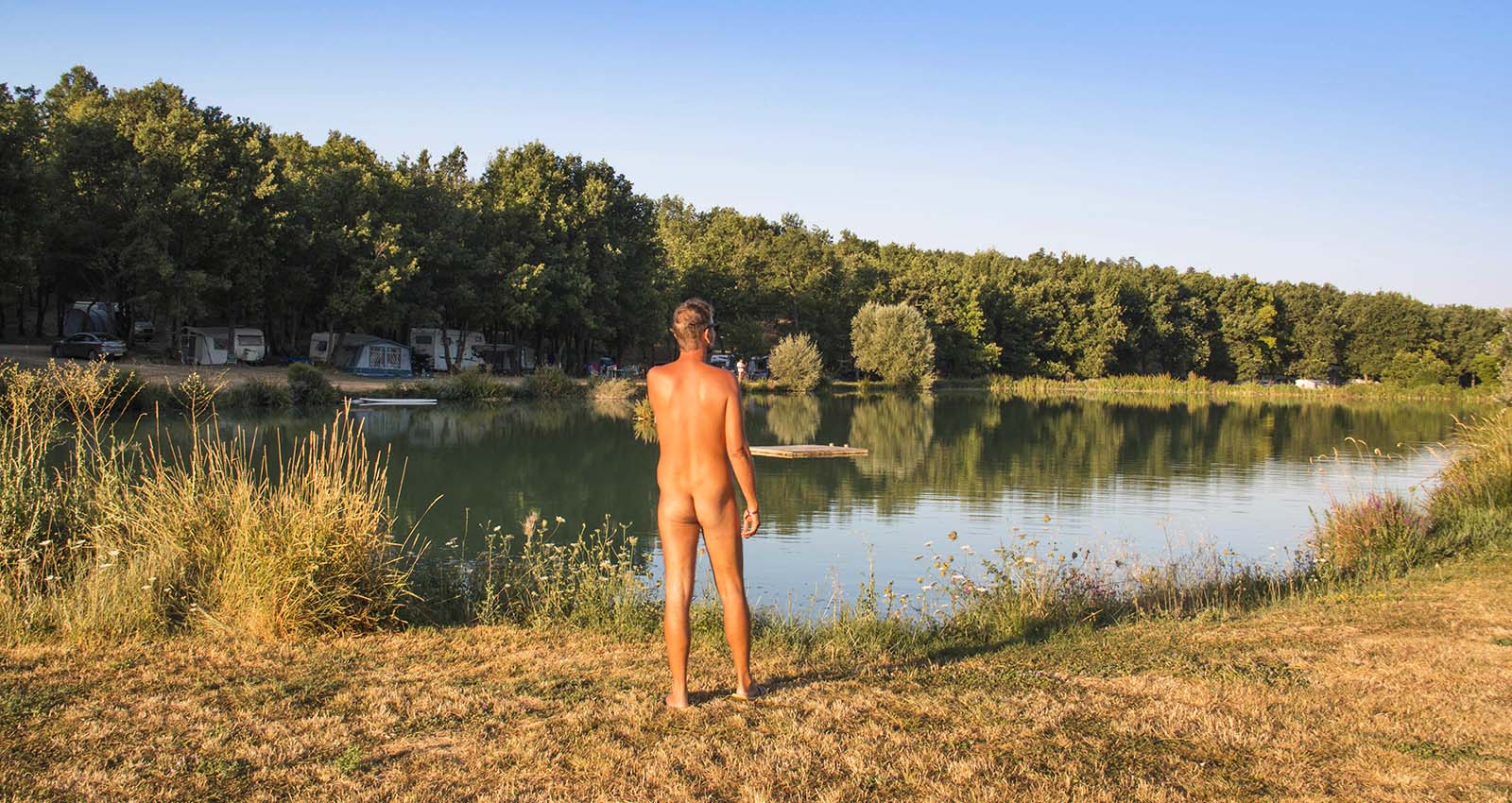
This blog post has been sponsored by naturist campsite Tikayan Le Petit Arlane, a beautiful naturist campsite in France where nature, simplicity, and a warm community spirit make for an unforgettable stay.
France has been the beating heart of naturist camping for over a century. It has more dedicated naturist campsites than any other country in the world, and a culture that treats naturism as a completely normal way to spend a family holiday. Whether you’re stepping into naturism for the first time or you’ve already got a few experiences under your belt (so to speak), here’s what you actually need to know to make the most of what France has to offer.
1. Understand the Difference Between a Camping Naturiste and a Village Naturiste
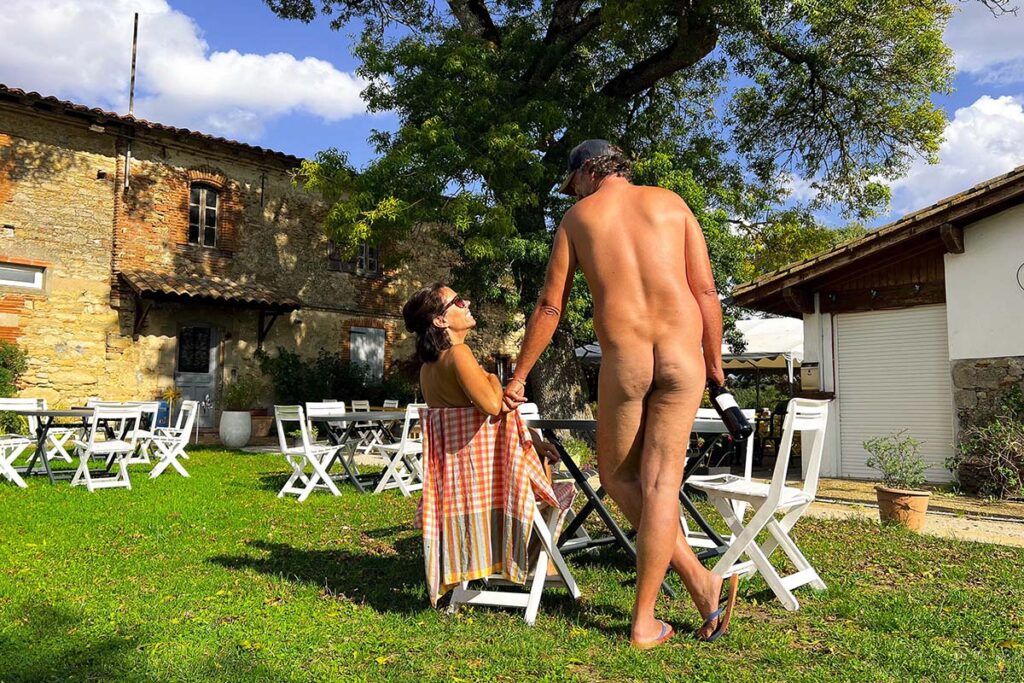
These are two very different things, and booking the wrong one can lead to a holiday that doesn’t match your expectations at all. A “camping naturiste” is a traditional campsite where naturism is the rule: you pitch your tent or park your van, share the facilities, and live the outdoor life.
A “village naturiste” is more of a permanent settlement, with rental bungalows, mobile homes, and sometimes even chalets, plus a fuller range of infrastructure like restaurants, sports facilities, and organised evening entertainment. Both are great. But knowing which one you’re walking into matters.

2. Skip August
The French school holidays transform even the most serene naturist campsite into organised chaos. August is peak season across the board: campsites are at full capacity, facilities are stretched, and the relaxed, unhurried atmosphere that makes French naturist camping so special is harder to find. Go in June or September instead. The weather is still excellent, the crowds are thinner, the prices are lower, and the whole experience feels noticeably more like the holiday you were imagining. Unless, of course, you’re actually looking for that super busy vibe, in which case August will deliver it in abundance.
3. Decide How You Want to Sleep Before You Book
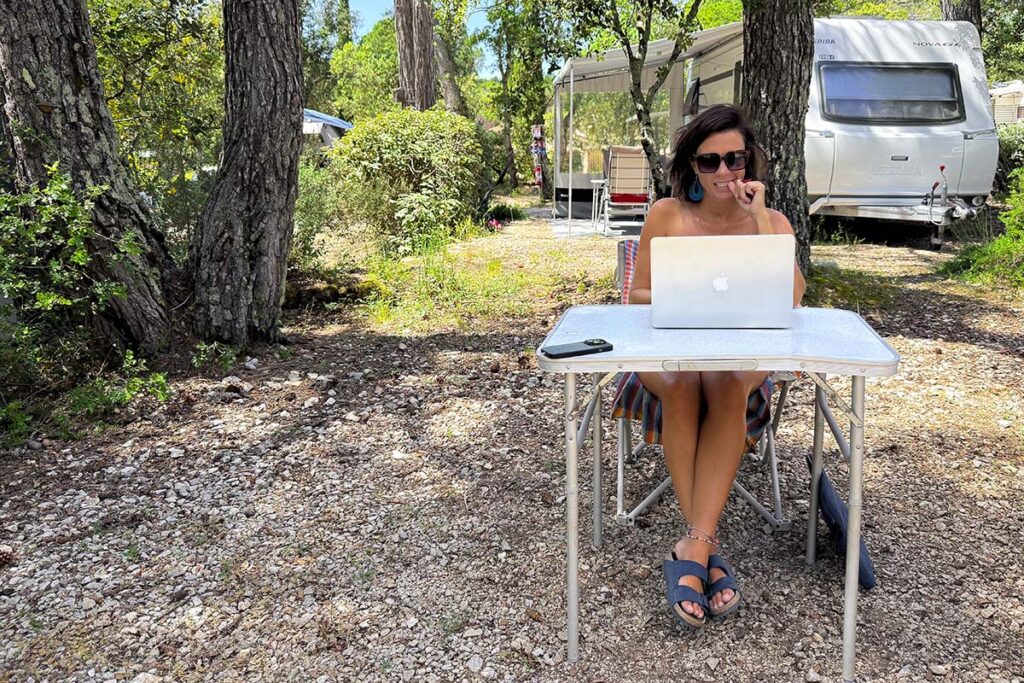
This sounds obvious until you realise how many people get it wrong. French naturist campsites offer a much wider range of accommodation than most people expect: tent pitches, campervan hookups, mobile homes, wooden lodges, bungalows, and sometimes fully equipped chalets. Renting a mobile home at a naturist campsite is a completely different holiday from pitching your own tent. It’s more comfortable, more expensive, and it changes how you relate to the site. If you want to really live the experience, bring your own accommodation. If you want a softer landing or you’re travelling with people who need a bit more comfort to get on board, renting is worth every euro.
4. Know Your Coast
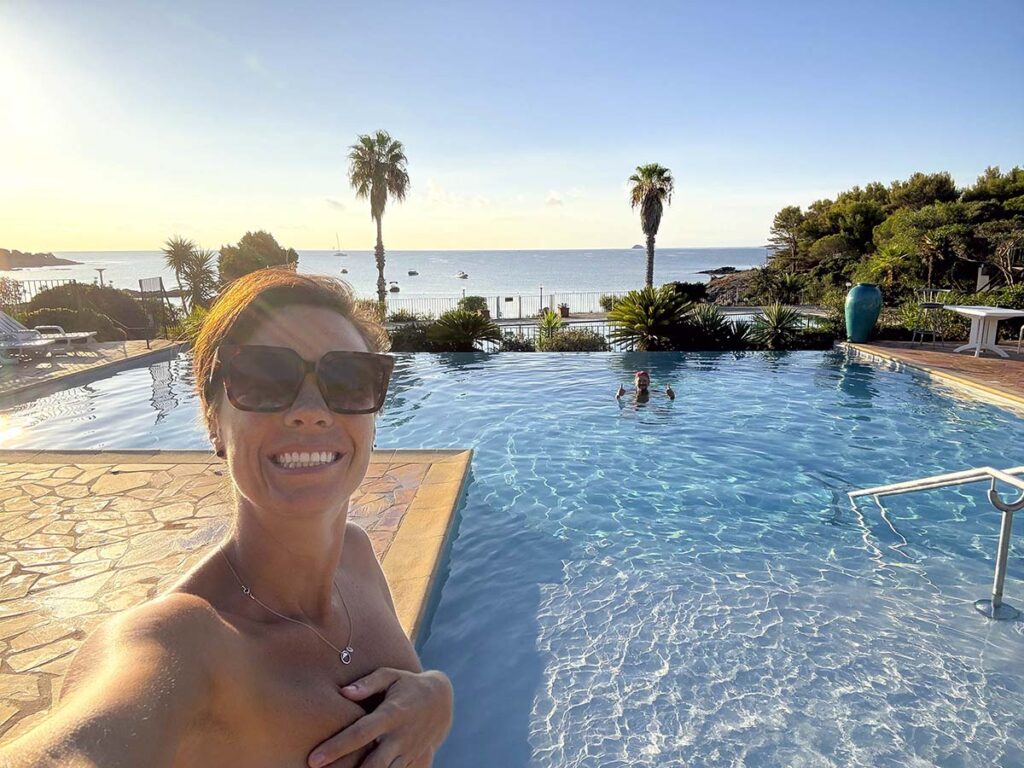
The Atlantic and the Mediterranean are two fundamentally different naturist experiences, and choosing between them based on a map is a mistake. The Landes and the Vendée on the Atlantic coast offer pine forests, vast sandy beaches, cooler evenings, and a quieter, deeply family-oriented atmosphere. The south (Var, Hérault, Corsica) is hotter, more social, more scenic, and generally more expensive. Neither is better. But arriving on the Atlantic coast expecting the full Mediterranean experience, or vice versa, will leave you feeling like something is missing.
5. Book Early and Read the Cancellation Policy
Good French naturist campsites fill up well before summer begins. Booking in January for August is not unusual at the most popular spots. What catches people out isn’t the booking itself but the fine print: cancellation policies at naturist campsites vary enormously. Some offer full refunds up to 30 days before arrival, others are non-refundable from the moment you confirm. Read the terms before you pay, and consider travel insurance if you’re booking months in advance.
6. The Social Programme Is the Point
French naturist campsites take their social calendar seriously, and this is one of the things that genuinely sets them apart. Pétanque tournaments, themed dinners, group walks, evening entertainment, wine tastings: these aren’t optional extras bolted on for people who get bored lying in the sun. They are the cultural fabric of the place. Showing up, taking part, and letting the social life of the campsite carry you along is how you understand why people come back to the same site year after year.

7. Read the Règlement Intérieur
Every French campsite posts a “règlement intérieur” (house rules) near reception, and at naturist sites, these go well beyond standard quiet hours. They specify where nudity is required, where it’s optional (near the entrance, in certain communal spaces), the rules around photography, and sometimes policies around alcohol or music after a certain hour. The French take these rules seriously and expect guests to as well. Reading them on arrival is not a formality: it tells you a lot about the culture of the specific campsite you’ve chosen.
8. Get Out of the Campsite
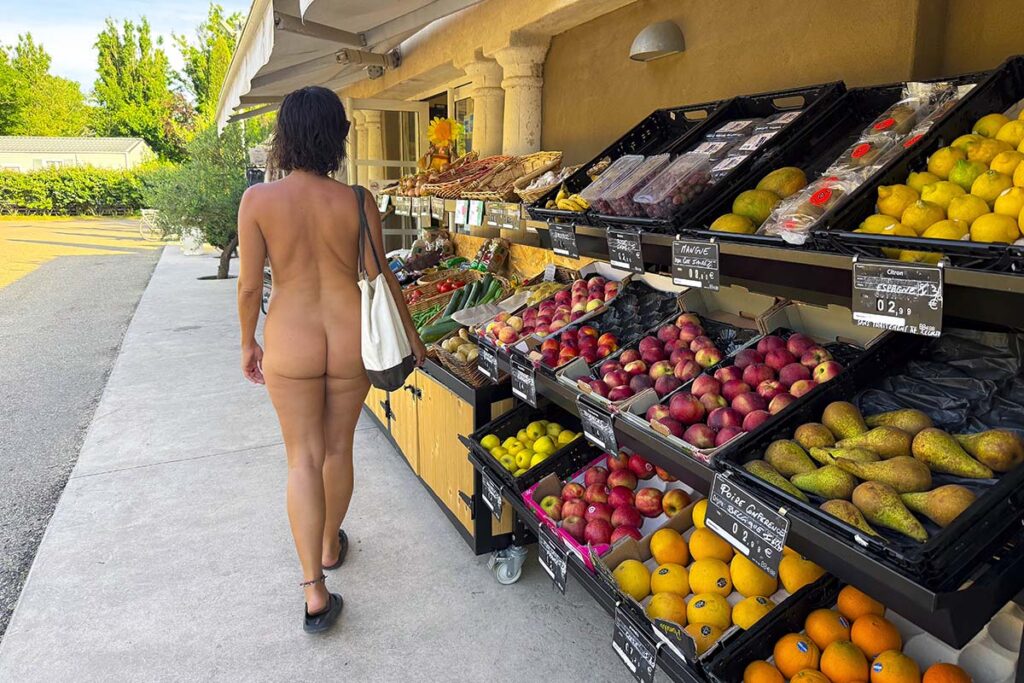
The best naturist campsites in France are not islands. They’re positioned near local markets, village fêtes, vineyards, coastal paths, and naturist beaches that extend well beyond the campsite’s own shoreline. Many visitors make the mistake of treating the campsite as the entire destination and then wonder why the week felt slightly repetitive by day four. Rent a bike, find the nearest Wednesday market, and eat lunch somewhere that has never heard of a sunlounger. The surrounding region is part of the experience.
9. Pack for the Evenings
This one catches people out every summer. France in July and August is hot, and packing a fleece feels genuinely absurd when you’re sweating at noon. But evenings in the Landes, in the foothills of the Pyrenees, or at higher-altitude campsites can get surprisingly cold once the sun drops. A light layer for after dark takes up almost no space and will make the difference between lingering over dinner outside and retreating to your tent at 9 pm, wondering where the evening went.

10. French Naturism Is Family Naturism
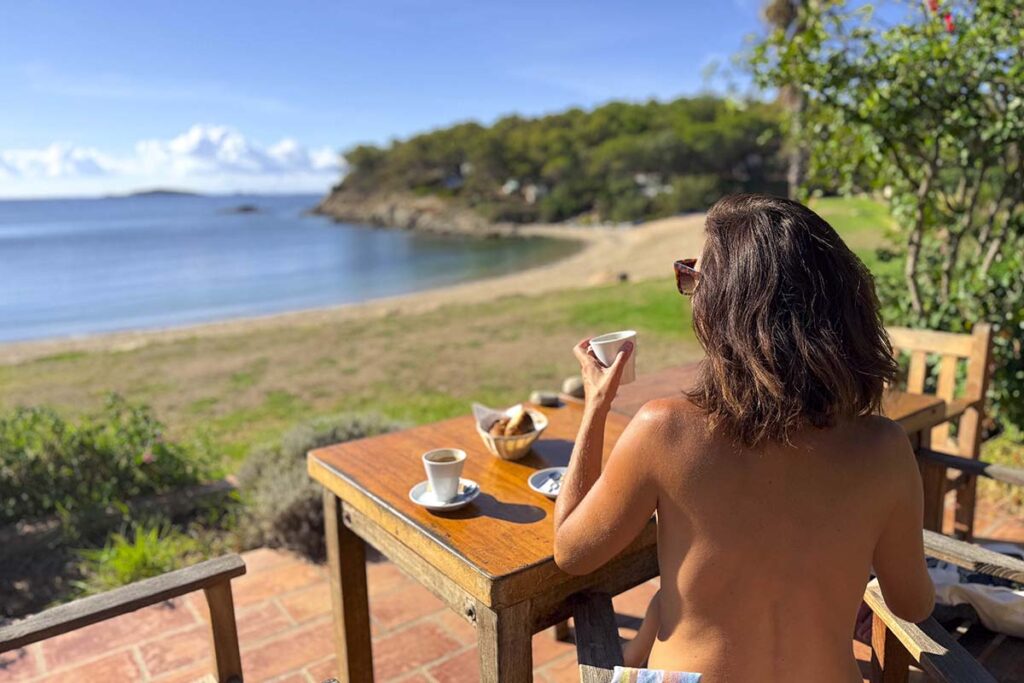
This surprises a lot of visitors who come from countries where naturism carries more of an adult or countercultural connotation. In France, naturisme is as wholesome as it gets: children playing volleyball, grandparents at the pétanque court, multi-generational family groups sharing a long dinner.
The atmosphere at most French naturist campsites is closer to a village fête than anything edgy or provocative. If you arrive expecting something niche and transgressive, you’ll find something much more ordinary, in the best possible sense. That normality is exactly what makes it so easy to settle in.
Ready to Go?
France rewards naturist campers who do a little homework before they arrive. Once you understand what you’re looking for and where to find it, the country offers a remarkable variety of options, from small, intimate sites to full naturist villages, from the Atlantic pine forests to the sun-baked Mediterranean coast. Pick your spot, book it early, and go enjoy one of the most relaxed ways to holiday that Europe has to offer.
Support Naked Wanderings
Do you like what we do for naturism and naturists?
Did we make you laugh or cry?
Did we help you find the information you were looking for?
Then definitely join our Patreon community!
This is a question. With the naturist lifestyle nude is in the nomenclature, it is a basic. With nude there is a stimulation for coupling to happen as nude is a stimulation to the desires and needs for sexual bliss. I am reading and reviewing the naturist invitations, and places, and information of how, and where to camp, and the same for the choices to be in a small area of a town to be naturist openly, nude, and accepted. I am not finding any explanations or guidance, as I read as to the pleasure that is part of human progression, with normal nude acceptance. In short, is there any allowable, accepted stimulation as it relates to the normal accompanying reaction to nudity, the joy of man, women intermingling. Are the naturists Asexual, or are they liking the normal pleasures of man woman coupling that is only natural to be greatly stimulated in a nude environment.
The mind stimulations toward pleasure not mentioned as part of the joy to visit a nude town with camping nude, and shopping nude, is it sex is not conducted nude here, and has no highlight related attachment usually related with nude adults.
Great question, and it’s one many newcomers have. The short answer: naturism deliberately separates nudity from sexuality. That’s actually a foundational principle.
Naturists aren’t asexual, they do have desires. But naturist spaces operate on a shared social contract: nudity here is about comfort, body acceptance, and freedom, not sexual display or invitation. The same way a locker room or a doctor’s office involves nudity without sexual context.
The reason why this topic isn’t covered in every piece of naturist content is purely because we consider it unrelated. To give you another comparison, many men get aroused from watching female sports. But that doesn’t make female sports something sexual.